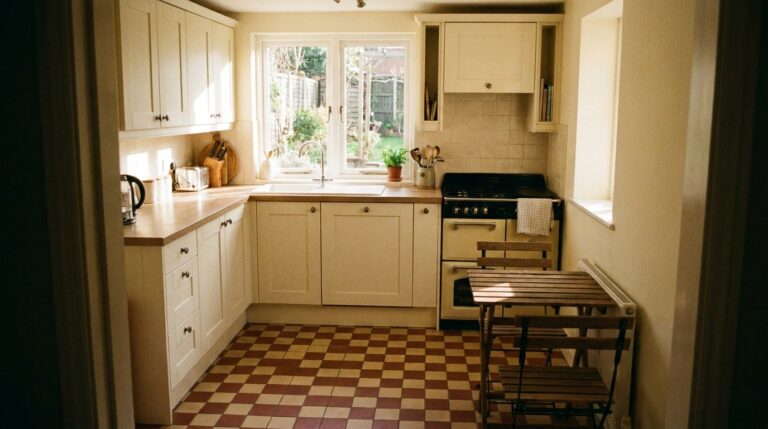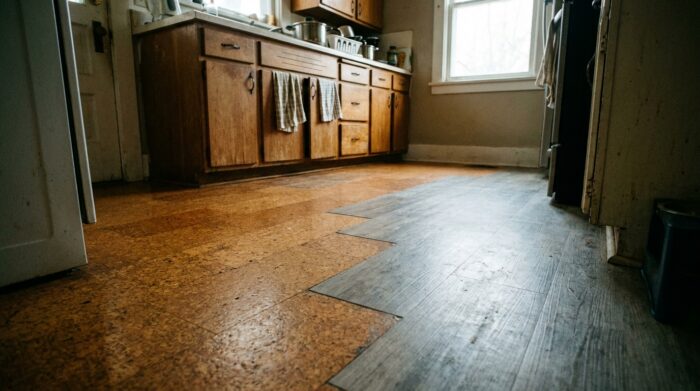
Vinyl is the easier choice for most kitchens: It is simple to care for and handles splashes if the specific flooring system is suitable. Cork offers more warmth, cushioning and impact sound insulation, but in a kitchen it needs proper sealing and protection from standing water.
How important is water resistance?
With vinyl, the label alone does not determine whether it is suitable. According to Tarkett, vinyl is easy to care for and install; you should still check the specific product information and installation requirements.
The core construction matters, too: Vinyl with an SPC or mineral core absorbs less water than options with a wood-fiber core. With vinyl flooring that has an HDF core, water seeping through the joints can cause swelling. Wipe up spills promptly, especially with click-lock flooring.
Cork is also available for kitchens. However, BauNetz Wissen recommends sealing it for kitchens and wet rooms. Even with a protective coating, avoid excessive moisture and do not leave standing water on the floor.
Which floor feels more comfortable to stand on?
Cork offers warmth, cushioning and impact sound insulation. This can matter in households where people spend a lot of time cooking or prefer a softer feel underfoot.
Tarkett also describes vinyl as warm underfoot and comfortable. The comparison is not simply between “soft” and “hard”: Cork offers the comfort features described above, while vinyl is also considered an easy-care kitchen flooring option.
If comfort is your priority, compare the features of the specific flooring products. Characteristics can vary by product, so it is not possible to make a general claim about every cork or vinyl floor.
How do care and everyday use differ?
Vinyl is the easier option when you want to clean up splashes and messes quickly in the kitchen. Still, check when buying whether the specific flooring is suitable for kitchens and what care the manufacturer recommends. The word “vinyl” alone does not tell you enough about the protection of the core and joints.
Sealed cork requires more attention during care. According to Ruhe/Naturkomfortboden, you should use only products recommended by the manufacturer and avoid excessive moisture. If you choose cork, consider the care instructions for the specific product as well as its sealing.
For both flooring types, it makes sense to review the manufacturer’s instructions before buying. For vinyl, pay particular attention to kitchen suitability and core construction. For cork, sealing and approved care products are important factors to consider.
What should you check before installation?
Cork can be glued down or installed as a floating floor. It requires a level, solid and dry subfloor, as BauNetz Wissen explains. Before deciding, consider not only the surface you want but also whether your existing subfloor is suitable.
Vinyl is generally easier to install. However, the right installation method and subfloor requirements depend on the specific product. Follow the product information and installation requirements rather than assuming suitability based on the material name.
The cited information does not provide a basis for comparing prices. To make your decision, compare the specific product costs and the subfloor preparation required for both options.
Which option suits your household?
Vinyl is a better fit if easy care and handling splashes are your priorities. Check the product’s core, joints and stated suitability for kitchens. With click-lock flooring, clean up spills promptly.
Cork may be a better choice if warmth, cushioning and impact sound insulation matter to you, and you can account for the required sealing and more careful maintenance. Also check that your subfloor is level, solid and dry, and confirm the installation method specified by the manufacturer.
The practical tradeoff is clear: Vinyl reduces the care required, but its water resistance depends on its construction. Cork offers comfort, but in a kitchen it requires appropriate sealing and careful handling of moisture.
Frequently asked questions
Is vinyl flooring suitable for kitchens?
Vinyl can be an easy-care kitchen flooring option. Check the specific construction: Options with a wood-fiber core can swell if water seeps in, while SPC or mineral cores absorb less water.
Can you install cork flooring in a kitchen?
Yes, cork can be used in a kitchen. Sealing is recommended for kitchens and wet rooms, and the subfloor must be level, solid and dry.
Which flooring is easier to care for?
Vinyl is described as easy to care for. Sealed cork should be cleaned with products recommended by the manufacturer, and excessive moisture should be avoided.
How is cork flooring installed?
Cork can be glued down or installed as a floating floor. The right method depends on the flooring product and the manufacturer’s installation requirements.