The best kitchen decor ideas start with things you already use. A good cutting board leaning against the backsplash, a stack of linen towels, a bowl of lemons or a row of glass jars can do more for a kitchen than a wall of signs. Decor in this room works when it looks useful, stays easy to clean and leaves enough counter space to cook.
This guide covers the four layers that shape how a kitchen feels: accessories, textiles, plants and the everyday objects you choose to leave out. Each section ends with a version for small kitchens, where every item on display has to earn its spot.
Start With a Plan, Not a Shopping List
Before buying anything, look at the room as it is. Note the fixed elements you will not change soon: cabinet color, countertop, backsplash, flooring, hardware finish. Your decor should pick up one or two of those colors or materials instead of fighting them. A kitchen with warm oak cabinets and brass pulls, for example, can take terracotta, olive green and cream accents; the same accents in a kitchen of cool gray and chrome often look out of place.
Then pick a short palette for decor: two main colors and one metal finish usually keep things calm. Everything you add afterward, from dish towels to vases, gets checked against that palette. It is the simplest way to make a room look designed rather than collected.
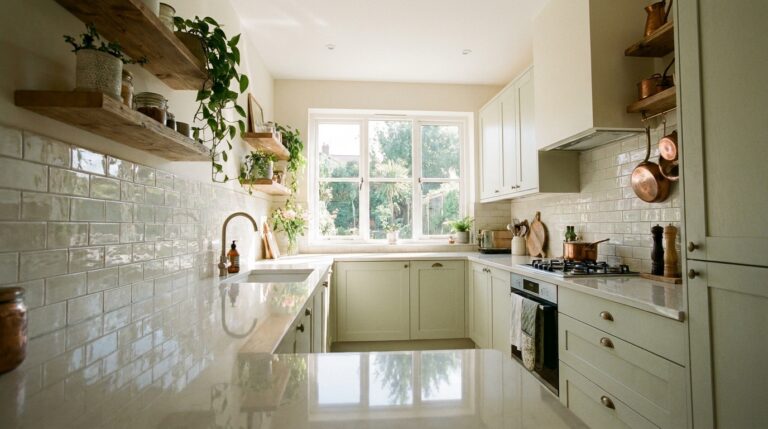
Finally, decide where decor will live. Most kitchens have three or four natural display spots: a corner of the counter, the windowsill, an open shelf, the top of the fridge or cabinets, a wall without upper cabinets. Concentrating decor in those zones and keeping the rest clear looks more intentional than spreading small objects everywhere.
Kitchen Accessories That Double as Decor
The most convincing kitchen decorating ideas use objects that have a job. They stay out naturally, so the display never feels staged.
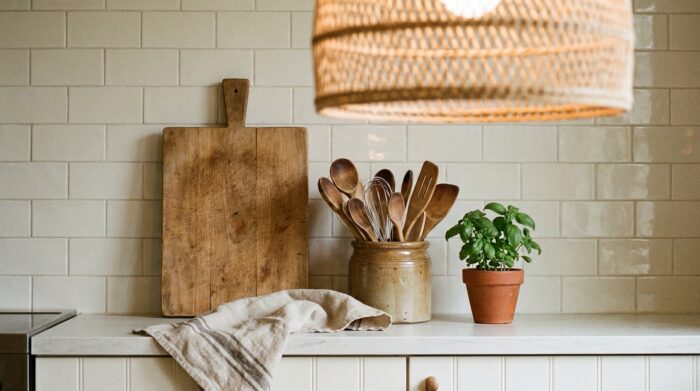
- Cutting boards: two or three wooden boards of different sizes, leaned against the backsplash, add warmth and texture. Mix shapes: one round, one with a handle.
- Utensil crock: a ceramic or stone crock next to the stove holds spatulas and wooden spoons and brings in a color from your palette.
- Canisters and jars: matching glass jars for pasta, rice, oats or coffee give a shelf rhythm. Decant only what you use often, so the jars stay full and neat.
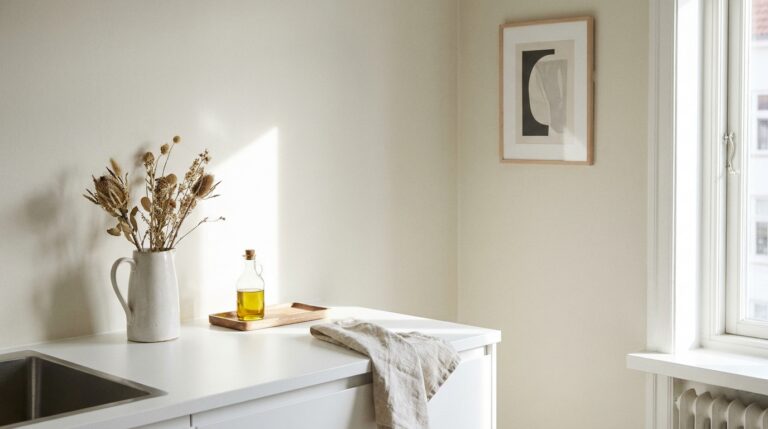
- Tray: a tray on the counter groups oil, vinegar, salt and pepper into one tidy vignette. It also makes wiping the counter faster, because you lift one thing instead of six.
- Fruit bowl: a wide bowl of seasonal fruit is free decor that changes every week.
- Cookware on display: an enameled cast iron pot left on the stove or a copper pan on a rail is decorative and saves cabinet space.
Keep to odd numbers and varied heights when grouping: a tall crock, a medium jar and a low bowl look balanced together. Three objects in a cluster read better than three objects lined up in a row.
For small kitchens
Limit the counter to one grouping, ideally on a tray, and keep the rest of the surface free for prep. Choose the accessory you reach for most often and make it the nicest version you can afford; it will do the decorating for you.
Textiles: The Fastest Way to Change the Mood
Fabric softens a room full of hard surfaces, and it is the easiest kitchen accent to swap with the seasons.
- Dish towels: hang two matching towels on the oven handle or a rail. Stripes, checks or a solid color from your palette all work; avoid mixing too many patterns at once.
- Runner or washable rug: a long runner in front of the sink or along a galley adds color and comfort underfoot. Choose a low pile, a non-slip backing and a material that tolerates frequent washing.
- Window treatment: a café curtain, a simple Roman shade or a short valance frames the window without blocking light. Keep any fabric well away from the cooktop.
- Seat cushions and table linen: if you have a breakfast nook or bar stools, cushion covers and a tablecloth or placemats are another place to repeat your colors.
- Aprons: a linen apron on a hook by the pantry looks charming and stays within reach.
Practical rule: everything textile in a kitchen should go in the washing machine. Grease and steam reach further than you think.
For small kitchens
Textiles are ideal in tight spaces because they add color without taking any counter space. A bold runner and matching towels can carry the whole decor of a compact kitchen.
Plants and Fresh Greenery
Living plants make a kitchen feel lived-in and fresh. Pick them according to your light, not just your taste.
- Herbs on the windowsill: basil, parsley, chives and mint are useful and pretty. They need a bright window; a dim sill gives leggy, pale herbs.
- Trailing plants on a shelf: pothos or philodendron draping from an upper shelf softens hard lines and tolerates lower light. Golden pothos is listed by the ASPCA as toxic to dogs and cats, so place it out of reach if you have pets.
- A branch in a vase: eucalyptus, olive or seasonal branches in a tall vase last longer than cut flowers and add height.
- Cut flowers: a small bunch in a jug on the table or by the sink is an easy weekly refresh.
Keep plants away from the stove, where heat and grease will damage the leaves, and away from the edge of the sink, where they are easy to knock over.
For small kitchens
Go vertical: a hanging planter near the window, a narrow wall shelf for two pots or a rail with small hanging buckets. One healthy plant looks better than five struggling ones crowded on the sill.
Everyday Objects Styled With Intent
Open shelving and glass-front cabinets turn your dishes into decor, which means they need a little editing. A few rules keep a display from looking cluttered:
- Group by color or material. All white dishes together, wood next to wood, glass with glass.
- Stack and stand. Mix horizontal stacks of plates with vertical elements such as a leaning board or a tall pitcher.
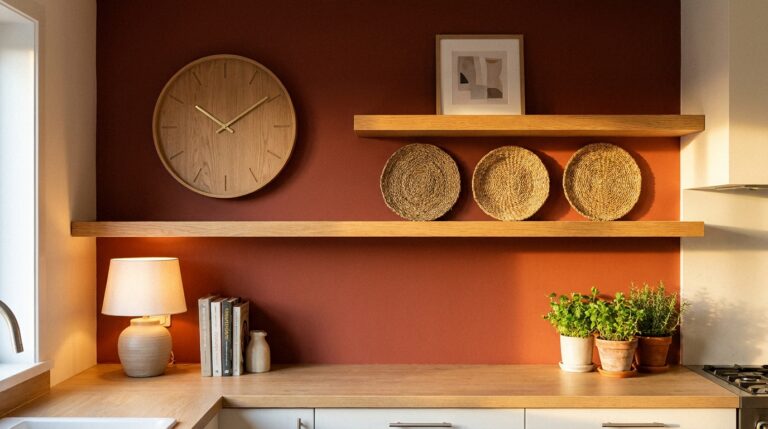
- Leave empty space. Roughly a third of each shelf left bare lets the objects breathe.
- Put the pretty things at eye level. Serving bowls and favorite mugs go in the middle; plain storage goes higher or lower.
- Add one personal piece per shelf. A cookbook with a great spine, a small framed print or a handmade bowl gives character.
Cookbooks deserve a special mention. A short row of cookbooks between two bookends, or a single one open on a stand, adds color and says something about the people who cook here.
For small kitchens
One open shelf is enough. Use it for the dishes you use daily, so the display rotates naturally and you free up a cabinet at the same time.
Walls, Hardware and Lighting as Decor
Some of the strongest kitchen design decorating ideas are not objects at all but small changes to the room itself.
- Hardware: new cabinet knobs and pulls in brass, matte black or ceramic change the character of a kitchen in an afternoon.
- Art: a framed print, a vintage poster or a small painting on an empty wall makes the kitchen feel like part of the home. Frames with glass are easy to wipe.
- A clock or a mirror: both fill a wall usefully; a mirror also bounces light around a dark room.
- Light fixtures: a pendant over a table or island, or a small lamp on the counter, adds a decorative focal point and a warmer light in the evening.
Kitchen Decor Ideas by Style
| Style | Key accents | Colors and materials |
|---|---|---|
| Modern | Few objects, sculptural vase, matte canisters, slim pendant | White, black, gray, stone, matte metal |
| Farmhouse | Wooden boards, ironstone pitcher, checked towels, open shelves | Cream, sage, natural wood, black hardware |
| Scandinavian | Light wood, linen towels, one plant, simple ceramics | White, pale wood, soft gray, muted pastels |
| Mediterranean | Terracotta, olive branches, painted tiles, woven baskets | Terracotta, ochre, blue, olive green |
| Vintage or eclectic | Mismatched mugs, framed prints, colored glass, cookbook stack | Warm reds, mustard, teal, brass |
Decorating a Small Kitchen Without Crowding It
In a compact room, decor and storage are the same conversation. The goal is to add personality while keeping surfaces free, which is the core of how to make the most of a small kitchen: work vertically, choose fewer and better objects and let light do part of the job.
- Pick one focal point, such as a runner, a colorful kettle or a single shelf, rather than decorating every surface.
- Favor wall and ceiling space: rails, hooks and a narrow shelf instead of counter clutter.
- Use light colors and reflective finishes on larger accents to keep the room bright.
- Store anything seasonal or rarely used out of sight and rotate it.
- Apply a simple test: if an object has neither a use nor real meaning to you, it goes.
Kitchen Decor FAQ
How can I make my kitchen look nicer without remodeling?
Change the hardware, add a runner and matching towels, group your counter items on a tray and bring in one plant. These four steps change the look of a kitchen for a modest budget and no construction.
What should I put on my kitchen counters for decor?
Choose useful objects: a utensil crock, a cutting board, a fruit bowl and a tray for oils and spices. Keep them grouped in one or two spots and leave the main prep area empty.
How do I keep kitchen decor from looking cluttered?
Stick to a short palette, group objects in odd numbers, leave empty space on shelves and concentrate decor in a few zones instead of spreading it across the room.
Are plants a good idea in a kitchen?
Yes, if they get enough light and stay away from the stove. Herbs suit a bright window, while trailing plants such as pothos tolerate shelves with less light, kept out of reach of pets.