The cabinet under the bathroom sink is often the most cluttered spot in the house: a tangle of bottles, spare toilet paper and cleaning supplies piled around the drain pipe. With a few smart organizers and some rules about what lives there, it can become one of the most useful storage spaces in the bathroom.
These under sink storage ideas work in standard vanities and small cabinets alike, with options for renters, for families with young children and for bathrooms with no vanity at all.
Start by Emptying and Sorting
Before buying any organizer, take everything out. It is the only way to see the real space and what you actually store.
- Empty the cabinet completely and wipe it down.
- Check for leaks: look at the trap, the supply valves and the cabinet floor for dampness, stains or swelling. Fix any drip before storing things again.
- Throw away expired products, near-empty bottles and anything you have not used in a long time.
- Group by category: cleaning, backup toiletries, hair tools, first aid, paper goods.
- Measure the width, depth and height of the cabinet, and note where the pipes run.
Only now decide which categories belong under the sink. Items you use daily are often better in a drawer or medicine cabinet at counter height.
Organizers That Work Around the Pipes
The drain pipe is what makes this space awkward. These solutions are designed for it:
| Organizer | How it helps | Best for |
|---|---|---|
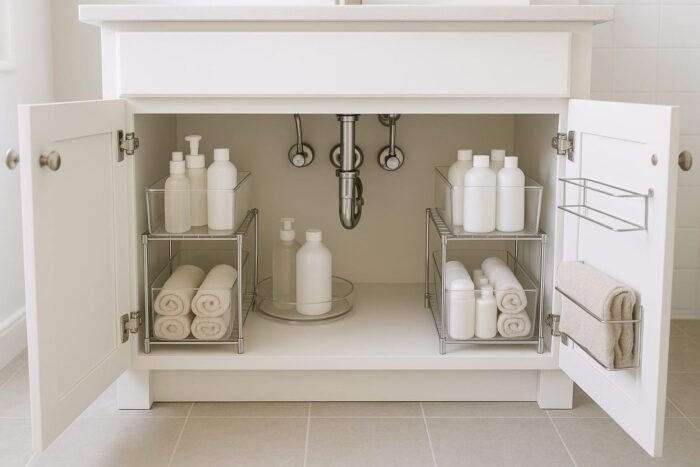
| Two-tier sliding organizer | Pull-out baskets on each side of the pipe, often with adjustable height | Bottles and cleaning products |
| U-shaped drawer or shelf | Wraps around the drain so the center space is not lost | Vanities you are replacing or retrofitting |
| Clear stackable bins | Let you see contents and pull out a whole category at once | Backup toiletries, first aid |
| Turntable | Brings items at the back within reach with a turn | Corner spaces and deep cabinets |
| Expandable shelf | Adjusts in width and has removable panels for pipes | Renters and odd-sized cabinets |
Measure the space between the cabinet door frame and the pipe before buying a sliding organizer. The face frame of many vanities makes the opening narrower than the inside of the cabinet.
Use the Doors and Walls
The inside of the cabinet doors and side walls is free storage space.
- Door-mounted racks: slim baskets on the inside of the door hold sprays, brushes or a hair dryer.
- Adhesive hooks: for cleaning gloves, a small caddy or a hair tool cord.
- Tension rod: fitted across the top of the cabinet, it holds spray bottles by their triggers and frees the floor below.
- Bag holder: a small dispenser for trash can liners.
Check that door-mounted items clear the pipes and shelves when the door closes, and do not overload the hinges.
Under Sink Storage Ideas for Small Bathrooms
In a compact vanity, every inch counts:
- Use narrow bins that fit the space on either side of the trap instead of one wide bin.
- Store tall items on the side where the pipes are furthest back.
- Keep only backups and weekly items here; daily items go behind the mirror.
- Label bins so everyone in the household puts things back in the same place.
For storage beyond the vanity, from over-the-toilet shelves to recessed niches, see our small bathroom storage ideas.
No Vanity? Storage Ideas for Pedestal and Wall-Mounted Sinks
A pedestal or wall-hung sink leaves no cabinet at all. You can still add storage below or around it:
- Sink skirt: a fabric skirt around a pedestal or wall-mounted sink hides a small bin or basket.
- Freestanding under-sink shelf: a slim shelf unit designed to fit around a pedestal.
- Baskets beneath a wall-mounted sink: a pair of lidded baskets keeps the look tidy.
- Shelf above: a narrow floating shelf over the sink holds soap and toothbrushes.
Our guide to small bathroom sinks compares pedestal, corner and wall-mounted options and the storage each one leaves.
Keep Cleaning Products Safe
Under the sink is a common place for cleaning products, and also a place small children can reach.
- Keep products in their original containers with their labels.
- Fit child safety latches or locks on the cabinet doors if young children live in or visit the home.
- Never mix cleaning products, and store bleach separately from ammonia- or acid-based cleaners.
- Keep the Poison Help line number, 1-800-222-1222 in the United States, somewhere easy to find.
In homes with young children, consider moving cleaning products to a high cabinet and keeping only paper goods and backups under the sink.
Protect the Cabinet From Water
A slow leak can ruin a vanity before anyone notices. A few simple habits help:
- Use a cabinet liner or mat: a waterproof tray or liner protects the cabinet floor and makes drips visible.
- Leave access to the valves: do not block the shut-off valves with bins, so you can turn off the water quickly.
- Check regularly: look under the sink every few months for dampness or a musty smell.
- Consider a leak sensor: a small battery-powered alarm placed on the cabinet floor sounds when it detects water.
When to Upgrade the Vanity Itself
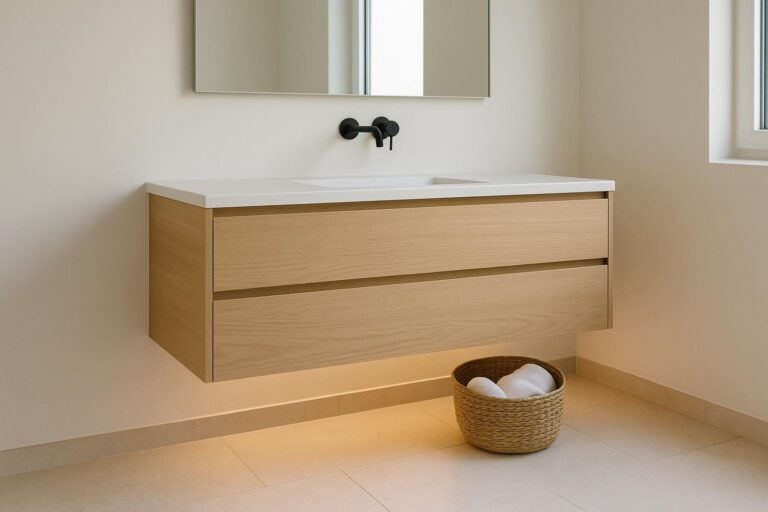
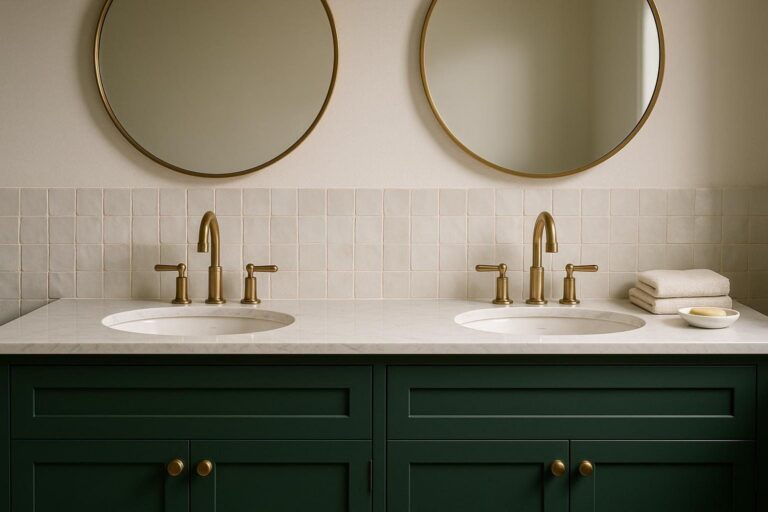
If the cabinet is swollen, smells musty or has a single door that wastes space, replacing the vanity may be the best organizer of all. Drawers, especially U-shaped ones designed around the drain, make far better use of the space than a single shelf. Our bathroom vanity ideas cover styles, tops and hardware if you decide to replace it.
Under Sink Storage FAQ
How do I organize under my bathroom sink?
Empty it, check for leaks, sort by category, then add organizers that work around the pipes, such as two-tier sliding baskets and clear bins.
What should not be stored under the bathroom sink?
Anything that suffers from humidity or that should be out of reach of children, such as medicines and, in many homes, cleaning products.
How do I stop water damage under the sink?
Use a waterproof liner, keep the valves accessible, check for drips regularly and fix leaks right away.
What can I do if my sink has no cabinet?
Add a sink skirt, baskets underneath or a shelf above, and move bulk items to a cabinet elsewhere in the room.