The best kitchen backsplash ideas solve two problems at once: they protect the wall behind the sink and cooktop, and they give the room most of its personality. Because a backsplash covers a small area, it is also one of the few places where a premium material or a bold pattern stays affordable.
This guide walks through the choices in the order you will face them: material, pattern, height, color, and finally the tricks that make a small kitchen look larger. Each section notes what is easy to clean, what suits a rental and what is worth the extra cost.
What a backsplash needs to do
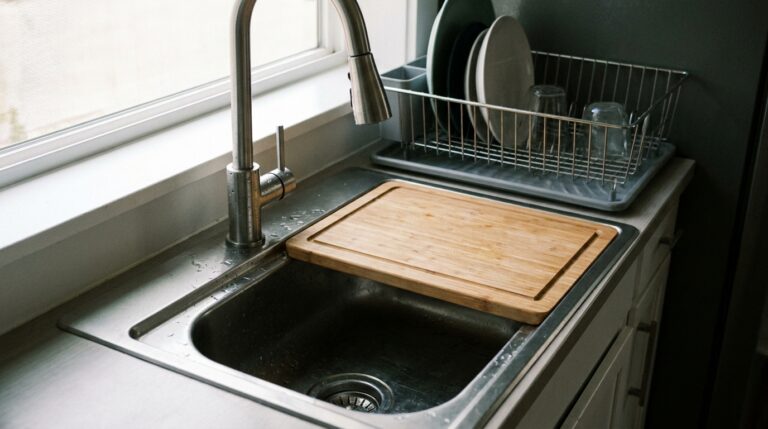
Before thinking about looks, list the practical demands. The wall behind a cooktop takes grease splatter and heat; the wall behind the sink takes water every day. A good backsplash surface is non-porous or sealed, wipes clean without scrubbing, and has as few deep joints as possible where grime can settle.
Think also about how the backsplash meets the rest of the kitchen. It has to finish cleanly at the countertop, at the underside of the upper cabinets or shelves, and at the side edges, where the end of a tile run is often the detail that makes or breaks the job.
Backsplash materials compared
| Material | Look | Upkeep | Good to know |
|---|---|---|---|
| Ceramic tile | Classic, endless colors and shapes | Easy; grout lines need care | Most affordable tile, easy to cut, DIY-friendly |
| Porcelain tile and slabs | From plain to marble or concrete look | Very easy, dense and non-porous | Large slabs mean almost no grout |
| Natural stone | Marble, slate, travertine | Needs sealing; marble etches with acids | Beautiful but less forgiving near the cooktop |
| Glass | Glossy, reflective, sleek | Easy, but shows water spots | Bounces light around a dark kitchen |
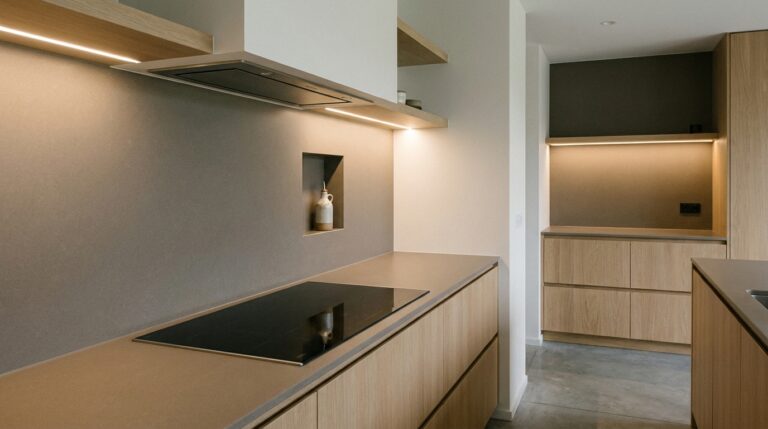
| Countertop material run up the wall | Seamless, high-end | Same as the counter | Uses quartz or stone offcuts or a full slab |
| Stainless steel | Professional, industrial | Shows fingerprints and scratches | Excellent behind a range |
| Scrubbable paint | Flat color | Fair; not for heavy splash zones | Cheapest option, often a stopgap |
| Peel-and-stick tiles | Tile, wood or stone imitations | Fair; can lift near heat | Renter-friendly and removable |
Ceramic and porcelain tile remain the default in American kitchens for good reason: they are durable, available in every style and priced from very cheap to designer. Natural stone looks wonderful but asks more of you, since marble is soft and reacts to lemon juice, vinegar and wine. Glass is a strong choice behind a sink in a dim kitchen, where its reflections lighten the room.
Patterns that change the whole room
The same tile can look traditional or modern depending on how it is laid. A few patterns cover most kitchens:
- Running bond (brick): each row offset by half a tile. The classic subway look, calm and timeless.
- Stacked: tiles aligned in a straight grid. Cleaner and more modern, especially laid vertically.
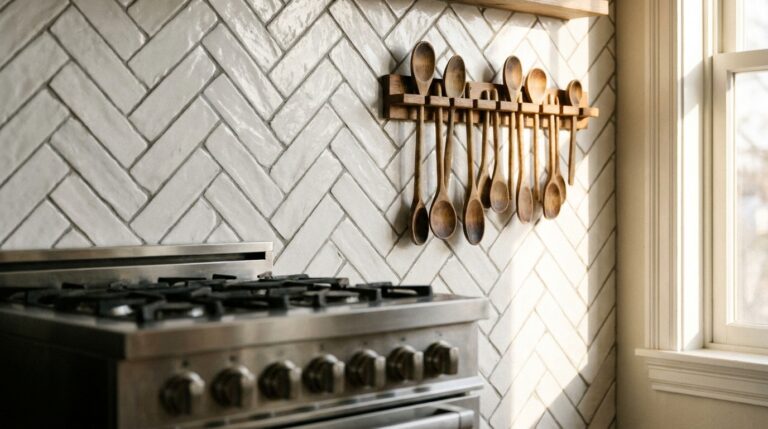
- Herringbone and chevron: zigzag patterns that add movement. Herringbone uses rectangular tiles; chevron needs tiles cut at an angle.
- Hexagon and fish scale: softer, more decorative shapes that work well as a feature behind the range.
- Checkerboard: two alternating colors for a retro, playful look.
Patterns with many cuts, such as herringbone, take longer to install and produce more waste, so budget extra tile, often 15 percent or more instead of the usual 10 percent.
How high should a backsplash go?
There are three common options:
- Countertop to upper cabinets. The standard choice. NKBA planning guidelines call for at least 15 inches of clear space above the counter under wall cabinets, and in most kitchens the backsplash fills that gap exactly.
- Full height to the ceiling. On walls without upper cabinets, or behind open shelves, taking the backsplash to the ceiling looks deliberate and makes the room feel taller.
- A short splash. A 4-inch strip of countertop material protects the wall joint and leaves the rest painted. It is economical but dates quickly unless the wall paint is very washable.
Behind the range, consider going taller than the rest, up to the hood. It is the zone that gets the most splatter, and it creates a natural focal point.
Choosing a color
A backsplash rarely stands alone: it sits between the countertop and the cabinets, so it has to agree with both. Three approaches work reliably:
- Tone on tone. A backsplash close in color to the cabinets or walls makes the room feel continuous and larger. White on white with a texture change is the classic version.
- Pick up the countertop. Pull a color from the veining of a quartz or stone counter so the two read as one surface.
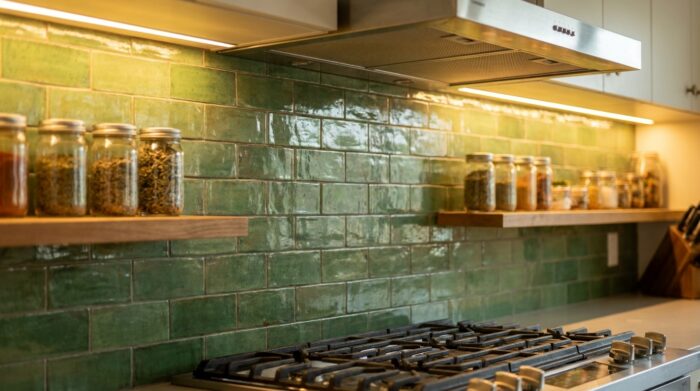
- One bold accent. If the cabinets and counters are neutral, the backsplash can carry the color: deep green, blue, terracotta or a patterned cement-look tile.
Grout color matters as much as tile color. Matching grout blends the joints and calms a busy pattern; contrasting grout, like dark gray with white subway tile, makes the pattern graphic and hides stains better.
Backsplash ideas that make a small kitchen feel bigger
In a compact kitchen, the backsplash may be the largest uninterrupted surface you see. Use it to stretch the room:
- Light, reflective surfaces. Glossy tile or glass reflects light from windows and under-cabinet fixtures.
- Fewer grout lines. Large-format porcelain or a slab backsplash reads as one plane and looks less busy.
- Vertical layouts. Tiles stacked vertically draw the eye upward and make a low ceiling feel higher.
- Run it further. Extending the backsplash across a whole wall, rather than stopping at the cabinet ends, makes the kitchen look wider.
- Light the wall. Under-cabinet LED strips graze the backsplash and show off texture, while removing the shadows that shrink a small room.
The backsplash is only one part of making a compact space work; layout, storage and lighting do the rest. If you want the whole picture before choosing tile, start with our small kitchen ideas guide, then come back to pick your finish.
Mistakes to avoid
- Choosing tile before the countertop. The counter is the bigger, costlier surface. Pick it first, then find a backsplash that suits it.
- Ignoring the outlets. Plan where switches and outlets land in the pattern. Centered in a tile or aligned with a grout line looks intentional; a sliver cut beside an outlet does not.
- Forgetting the edges. Decide in advance how the tile ends at the side of a wall or a cabinet: a bullnose tile, a metal edge trim or a return onto a natural stop.
- Too many ideas at once. A patterned floor, a patterned backsplash and veined counters compete with each other. Let one surface lead and keep the others quiet.
- Skipping a sample. Tile looks different under your own light. Lean a few pieces against the wall for a day and look at them in the morning and at night.
Budget-friendly and rental-friendly options
If a full tile job is not in the plan, there are honest alternatives:
- Peel-and-stick tiles install in an afternoon and remove without damage, though they can lift near high heat.
- Scrubbable paint in a satin or semi-gloss finish handles light splashes; add a sheet of glass or steel behind the cooktop.
- Tile only the essentials: behind the sink and range, with paint between.
- Retile over old tile only if the existing tile is sound and flat, and check that outlets and trim still fit the extra thickness.
Kitchen backsplash ideas FAQ
What is the easiest backsplash to keep clean?
Large-format porcelain, a slab of quartz or glass panels, because they have few or no grout lines. Small mosaics are the most work to keep clean.
Should the backsplash match the countertop?
It should coordinate, not necessarily match. Picking up one tone from the counter, or running the counter material up the wall, are the two safest approaches.
Is subway tile still a good choice?
Yes. It is affordable, easy to install and neutral, and changing the layout, size or grout color keeps it from looking generic.
Do I need a backsplash behind open shelves?
Behind the sink and cooktop, yes. Elsewhere it is optional, but running tile to the ceiling behind open shelves is an easy way to make the wall look finished.