In a small kitchen, the sink is often the biggest thing on the counter. Choosing the right small kitchen sink is a balance: big enough to wash a sheet pan and a stockpot, compact enough to leave room for chopping and drying dishes. The good news is that a well-chosen single bowl, plus a few accessories, can actually give you more usable space than a large double sink.
Here is how to pick the size, the bowl configuration and the mounting style, and which accessories turn the sink into extra counter space.
Single bowl or double bowl in a small kitchen?
For most small kitchens, a single bowl is the better choice. A double sink splits the same width into two smaller basins, so neither fits a large baking sheet or roasting pan. One wider bowl handles big items and, with a dishwasher, the two-bowl system of washing and rinsing is rarely needed.
A double sink still makes sense if you wash a lot of dishes by hand or like to keep one side free while the other soaks. In that case, look for a design with a low divider, which lets long items lie flat across both bowls.
Sizes that fit a small kitchen sink cabinet
The sink has to fit inside its base cabinet, and the manufacturer specifies a minimum cabinet width for each model. As a general guide:
| Sink width | Typical use | Good for |
|---|---|---|
| About 15 to 20 inches | Bar or prep sink | Second sink on an island, very tiny kitchenettes |
| About 21 to 25 inches | Compact single bowl | Studios, galley kitchens, tight corners |
| About 27 to 30 inches | Standard single bowl | Most small kitchens, fits large pans |
| About 33 inches and up | Large single or double bowl | Larger kitchens with plenty of counter |
Always check the sink’s specification sheet for the minimum base cabinet size before buying, and measure the depth too: a deeper bowl hides dishes and limits splashing, but can be tiring to reach into for taller or shorter people.
Undermount, drop-in or farmhouse?
Undermount
An undermount sink sits below the countertop, so you can wipe crumbs and water straight into the bowl. It gives a clean look and makes the most of a small counter. It requires a solid countertop such as quartz, granite or solid surface.
Drop-in (top-mount)
A drop-in sink rests on the countertop with a visible rim. It is usually the easiest to install and replace, and it works with laminate counters, which makes it a common choice in rentals and budget refreshes.
Farmhouse (apron-front)
A farmhouse sink has an exposed front panel and usually a deep, wide bowl. It is a strong style statement but often needs a specific cabinet. In a small kitchen, look for a narrower apron-front model so it does not take over the counter.
Corner sinks
Corner sinks can use an awkward corner in an L-shaped or U-shaped kitchen, but they can make the corner cabinet below hard to access and leave less room to stand. Compare carefully with a standard sink placed next to the corner.
Materials for a small kitchen sink
- Stainless steel: light, affordable, hard to break and easy to match with any style. Thicker steel (a lower gauge number) is quieter and dents less.
- Composite granite or quartz: solid colors such as black, white or gray, quieter than steel and resistant to scratches.
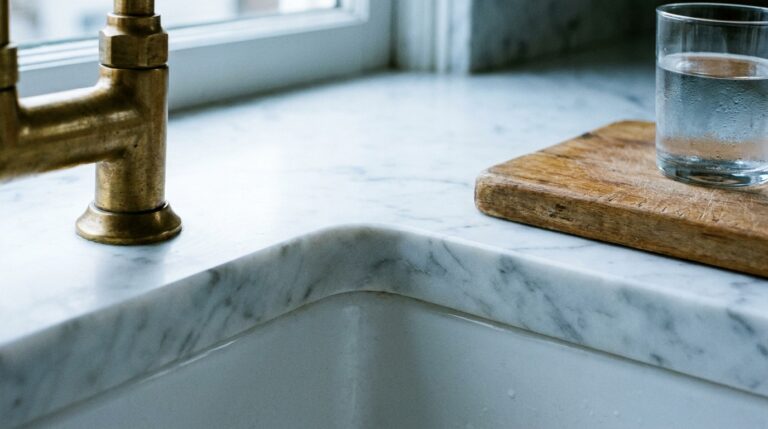
- Fireclay: glossy, classic look, typical of farmhouse sinks, heavy and resistant to stains.
- Enameled cast iron: durable, quiet and heavy, needs solid cabinet support.
Workstation sinks and accessories that add counter space
This is where a small kitchen sink really earns its place. Workstation sinks have a built-in ledge that holds accessories over the bowl, and many standard sinks can use similar add-ons.
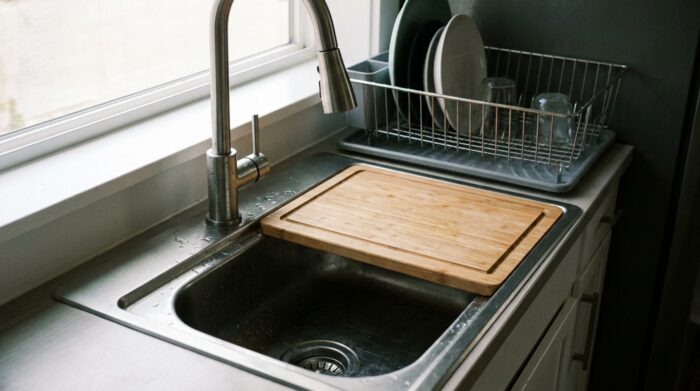
- Over-the-sink cutting board: covers part of the bowl and creates a prep surface; scraps go straight into the sink.
- Roll-up drying rack: rolls out over the sink to dry dishes and rolls up into a drawer.
- Colander that sits on the ledge: for rinsing vegetables and fruit without taking counter space.
- Bottom grid: protects the bowl and lets you drain dishes directly in the sink.
- Sink caddy or tilt-out tray: stores sponges and brushes in the false front of the sink cabinet instead of on the counter.
These accessories are part of a wider strategy for work surfaces; our kitchen countertop ideas explain how material and layout choices also add usable counter.
Faucets for a small sink
A single-handle faucet takes less deck space than a two-handle model. A pull-down sprayer helps rinse the whole bowl, which matters more when the sink is compact. Check the spout height and reach against the window sill or upper cabinets, and choose a reach that sends water to the middle of the bowl, not the back edge.
Placement tips
- Leave counter space on both sides of the sink when you can: a side for dirty dishes and a side for clean ones.
- Keep the dishwasher right next to the sink to make loading easy.
- Under a window, check that the faucet can turn without hitting the sill.
- Keeping the sink where the plumbing already is saves time and money during a remodel.
The sink is only one piece of the puzzle, and our guide to getting the most from a compact kitchen covers the layout, storage and appliance choices around it.
Small kitchen sink FAQ
What is the best sink size for a small kitchen?
A single bowl around 24 to 30 inches wide suits most small kitchens: large enough for sheet pans, small enough to leave counter space. Check the minimum cabinet width on the specification sheet.
Is a single bowl sink better for a small kitchen?
Usually yes. One larger bowl fits big pots and pans better than two small ones and works well with a dishwasher.
How can I get more counter space around my sink?
Use an over-the-sink cutting board, a roll-up drying rack, a colander that sits on the rim and a tilt-out tray for sponges. A workstation sink is designed for exactly this.