Countertops are the hardest-working surface in a kitchen. They take hot pans, knife slips, wine spills and daily scrubbing, and they cover a big share of what you see when you walk in. The best kitchen countertop ideas start with how you cook and clean, then move on to looks: the right material for a busy family kitchen is not always the right one for a weekend baker.
Below, we compare the main countertop materials, look at edges, colors and finishes, and finish with practical ways to gain counter space in a small kitchen, where every extra foot of work surface counts.
Kitchen countertop materials compared
| Material | Strengths | Weaknesses | Maintenance |
|---|---|---|---|
| Quartz (engineered stone) | Non-porous, consistent color, wide choice of looks | Can be damaged by high heat, seams visible on long runs | Low, no sealing |
| Granite | Heat-resistant, natural pattern, every slab unique | Porous, heavy, busy patterns in some slabs | Sealing at intervals recommended by the fabricator |
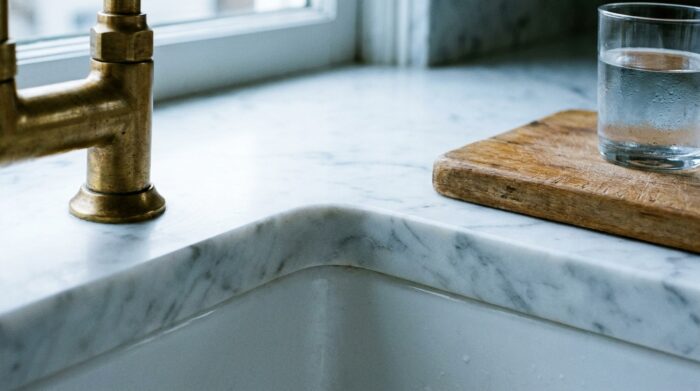
| Marble | Classic look, cool surface for pastry | Etches with acids, stains, scratches | High, sealing and quick cleanup |
| Butcher block (wood) | Warm, affordable, can be sanded and refinished | Water and heat marks, needs care near the sink | Regular oiling or a sealed finish |
| Laminate | Most affordable, many patterns, light weight | Not heat-resistant, chips at edges, hard to repair | Low |
| Solid surface | Seamless, integrated sinks possible, repairable | Scratches and heat marks more easily than stone | Low, scratches can be buffed |
| Concrete | Custom shapes and colors, industrial look | Can crack and stain without a good sealer | Sealing required |
| Soapstone | Dense, not affected by acids, develops a patina | Soft, scratches and dents | Optional mineral oil, scratches can be sanded |
| Stainless steel | Heat-resistant, hygienic, professional look | Scratches and dents, shows fingerprints | Low, but scratches are part of the look |
Quartz
Quartz countertops are made from ground quartz bound with resins and pigments. They do not need sealing and resist stains, which is why they have become so popular in family kitchens. Patterns range from solid colors to convincing marble looks. The resin is their weak point: always use a trivet for hot pans, and check the manufacturer’s guidance before using it outdoors in direct sun.
Granite and other natural stone
Granite stands up well to heat and wear. Each slab is unique, so it is worth choosing your own slab in person. Most granites need periodic sealing; your fabricator can tell you how often for the stone you choose. Marble is beautiful but softer and sensitive to acids such as lemon juice and vinegar, which leave dull marks called etching. Soapstone is a quieter natural option that many cooks love for its feel and resistance to acids.
Butcher block
Wood counters bring warmth to white or painted kitchens and are among the easiest to install yourself. They need regular oiling, or a sealed finish if you will not cut directly on them. Many people use butcher block on an island or a baking station and a more water-resistant material around the sink.
Laminate
Modern laminate looks far better than the speckled counters of past decades, with stone and wood patterns and thinner edge profiles. It is the budget-friendly choice for rentals, laundry rooms or a quick kitchen refresh, but keep hot pans off it.
Colors and finishes that work
- White and light quartz: brightens the kitchen and reflects light onto the backsplash.
- Soft marble looks: subtle veining adds interest without the maintenance of real marble.
- Warm wood: pairs well with green, navy or white cabinets.
- Dark counters: black or charcoal granite, soapstone or quartz create contrast with light cabinets.
- Honed or matte finishes: hide fingerprints and look softer, but can show oil marks on some stones.
- Polished finishes: reflect more light, a plus in a small or dark kitchen.
Mixing materials is common: for example, quartz on the perimeter and wood or a contrasting stone on the island. Keep it to two materials so the kitchen stays coherent.
Edges, thickness and backsplash
The edge profile changes the look more than you might expect. A square or eased edge looks modern and clean. A bullnose or beveled edge is softer and safer in busy households. Ogee and other decorative edges suit traditional kitchens.
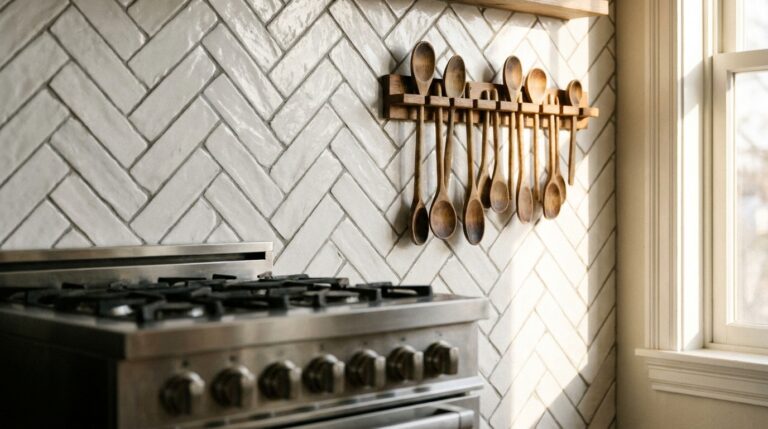
Thinner slab profiles look lighter and more contemporary; thicker or mitered edges make the counter look substantial. Another popular idea is the full-height slab backsplash, where the countertop material continues up the wall. It gives a seamless, easy-to-clean surface with no grout lines.
Kitchen countertop ideas for a small kitchen
In a small kitchen, the question is not only which material to choose, but how to get more usable surface. Some solutions:
Extend the counter where you can
Run the counter over a gap that was used for a freestanding appliance, extend it beyond the last base cabinet with a bracket-supported overhang, or add a peninsula that doubles as a breakfast bar. Even 12 extra inches next to the stove make cooking easier.
Choose a single-bowl or smaller sink
A large double sink can take a lot of counter. A single bowl in a reasonable size, with accessories that cover it while you work, can give back useful prep space.
Cover the cooktop and sink
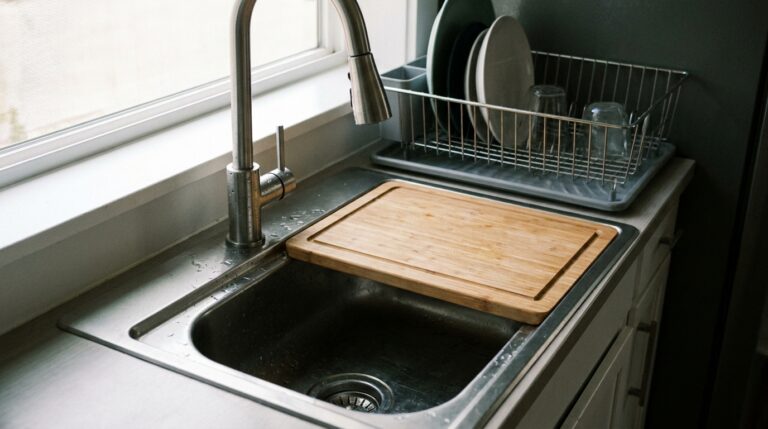
Fitted cutting boards that sit over the sink, and cooktop covers designed for your model, turn unused zones into work surface. Never cover a cooktop that is on or still hot.
Add pull-out work surfaces
A pull-out cutting board stored in a base cabinet, or a fold-down shelf on the end of a run of cabinets, provides extra surface only when needed.
Use a mobile island or cart
A rolling cart with a butcher block top adds a movable prep station that can be pushed aside when not in use.
Keep it visually calm
A light, low-contrast countertop and a matching backsplash make a small kitchen feel larger, and clearing appliances off the surface doubles its usable length. Countertops are only one lever, though; our roundup of tips for planning every corner of a tight kitchen covers layout, storage, color and lighting too.
Matching the countertop to the rest of the kitchen
A countertop rarely works on its own. It sits between the cabinets and the backsplash, so the three should be chosen together. A few combinations that are easy to live with:
- White cabinets, warm wood counters: a soft Scandinavian or farmhouse look that hides small marks on the wood.
- Green or navy cabinets, white quartz: the light counter balances the deeper color and keeps the room bright.
- Wood cabinets, dark granite or soapstone: a classic, grounded pairing that suits traditional homes.
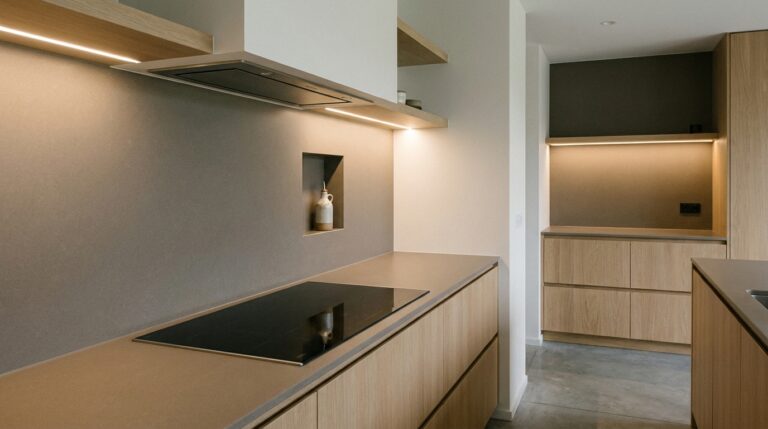
- Flat-panel cabinets, slab backsplash in the same quartz: a seamless modern look with almost no grout to clean.
Bring a cabinet door sample or a paint chip when you choose the slab. Countertop colors shift a lot between showroom lighting and a real kitchen, especially whites and grays, which can look cool or warm depending on the light around them.
Practical tips before choosing
- See full slabs or large samples under your own kitchen light, not just small chips in a showroom.
- Ask about seams. On long runs and L-shaped counters, ask where the seams will be.
- Check the cabinets. Heavy stone needs level, solid base cabinets.
- Plan the sink and faucet first. Undermount sinks require solid-surface, stone or quartz counters; laminate usually works with drop-in sinks.
- Think about cleaning. Use the cleaners your fabricator recommends; harsh or acidic products can damage some stones and finishes.
Kitchen countertop ideas: FAQ
What is the most durable kitchen countertop?
Quartz and granite are among the most durable for everyday use. Quartz needs no sealing and resists stains; granite handles heat better. Both resist scratches well.
What countertop is best for a small kitchen?
A light, low-pattern material such as white or pale quartz, laminate or light wood keeps a small kitchen calm and bright. Since there is less surface, a higher-end material may also be more affordable than in a large kitchen.
Can you put hot pans on quartz?
It is best not to. The resin in quartz can be damaged by high heat, so use a trivet or hot pad.
Is butcher block a good kitchen countertop?
Yes, as long as you oil it regularly or choose a sealed finish, and wipe water quickly near the sink.