A tub shower combo does two jobs in one footprint, which is exactly why it remains the default in so many American bathrooms. In a small room it is often the smartest choice, not a compromise. The best tub shower combo ideas simply make it look intentional: a clean tile surround, the right glass, and a few details that make daily use easier.
Here is how to decide whether to keep the tub, how to tile the surround, and which screens and fixtures suit a compact bathroom.
When to keep the tub in a small bathroom
Converting a tub into a walk-in shower is popular, but it is not right for every home. Keeping a shower and tub combo makes sense when:
- It is the only tub in the house. Families with young children bathe them, and some buyers look for at least one tub.
- You enjoy baths. A deeper soaking tub can fit the same alcove as a standard one.
- Budget is tight. Keeping the tub avoids moving the drain and rebuilding the floor.
- The room is short. A standard alcove tub is typically 60 inches long, and it can fit neatly across the end of a 5-foot-wide bathroom.
If none of these apply and the tub goes unused, explore walk in shower ideas before committing to a new tub.
Tub options for a small bathroom
| Tub type | What it offers | Things to check |
|---|---|---|
| Standard alcove tub | Fits between three walls, easiest to tile | Depth is often modest for soaking |
| Deeper soaking alcove tub | More water depth in the same footprint | Higher step over the rim, more water to heat |
| Small freestanding tub with shower | Sculptural look | Needs a ceiling-mounted curtain rail or wet room design |
| Corner tub | Uses a corner in square rooms | Harder to shower in and to enclose |
A small bathroom with a soaking tub works best when the tub is an alcove model that tiles in cleanly. A freestanding tub looks beautiful but needs clearance around it, which small rooms rarely have.
Tile ideas for the tub surround
The tub surround is the biggest tiled surface in most small bathrooms, so it sets the tone for the whole room.
Tile to the ceiling
Stopping the tile a few inches above the shower head creates a strong horizontal line that shortens the wall. Running it to the ceiling makes the room look taller and protects the paint from steam.
Go large or go simple
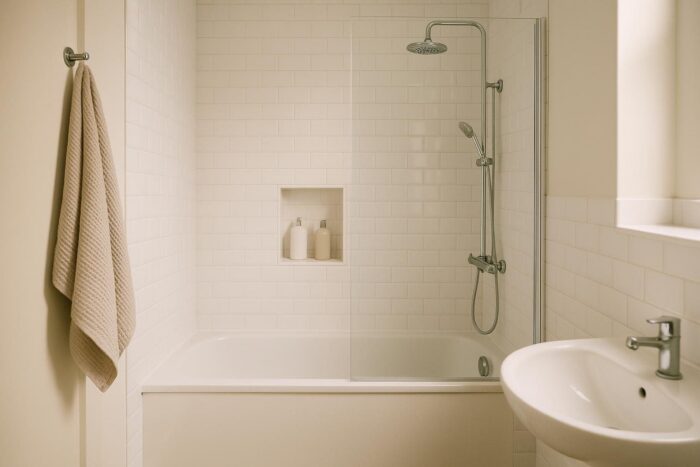
Large-format porcelain means fewer grout lines and easier cleaning. Classic subway tile in a stacked or offset pattern is a reliable alternative that suits almost any style.
Wrap the whole wall
Extending the surround tile across the entire tub wall, beyond the edges of the tub, makes the combo look built in rather than dropped in.
Add a niche
A recessed niche between studs keeps bottles off the tub rim. Line it up with a grout line so it looks planned.
Tile the apron
If your tub has a tiled apron rather than a finished front, using the same tile as the floor or walls gives a custom look. Plan an access panel if the drain has no other access point.
Curtain, glass panel or sliding door?
- Curtain on a curved rod: the cheapest option, and the curve adds elbow room at shoulder height. A ceiling-mounted rod makes the room look taller.
- Fixed glass screen: a single hinged or fixed panel covers the shower end of the tub and leaves the rest open. It keeps the tile visible and makes bathing easy.
- Sliding glass doors: they contain water best but add a track on the tub rim that needs cleaning.
Any glass enclosing a tub or shower must be safety glazing under IRC R308.4.5, so look for the permanent mark in the corner of each pane.
Fixtures and details that improve daily use
- Pressure-balance or thermostatic valve: the IRC requires one for tub/shower combinations, with the high-limit stop set to 120°F or lower.
- Handheld shower: rinsing the tub, bathing kids and washing pets all get easier.
- Grab bar blocking: add wood blocking in the wall during a remodel, even if the bar comes later.
- Slip-resistant tub surface: a textured bottom helps when you shower standing in the tub.
Bathroom tub and shower tile ideas by style
- Classic: white subway tile, white grout, chrome fixtures.
- Modern: large matte porcelain, matte black fixtures, frameless screen.
- Warm and relaxed: zellige-style tile in sand or clay tones, brass fixtures, a linen curtain.
- Bold: patterned tile only on the back wall of the tub, calm tile everywhere else.
The tub is only one part of a compact bathroom. For vanity, storage and paint choices that make the whole room feel bigger, browse our space-saving tricks for compact bathrooms.
Tub shower combo FAQ
Is a tub shower combo a good idea for a small bathroom?
Yes, especially if it is the only tub in the house. It serves both bathing and showering in one footprint.
What is the best tile for a bathtub shower surround?
Porcelain or ceramic tile, in large formats or classic subway. Taking it to the ceiling makes a small room feel taller.
Is a glass screen better than a curtain?
A fixed screen looks cleaner and keeps the tile visible. A curtain costs less and is easier when bathing children.
Can I put a soaking tub in a small bathroom?
Often yes. Deeper soaking tubs come in standard alcove sizes and fit the same space as a regular tub.