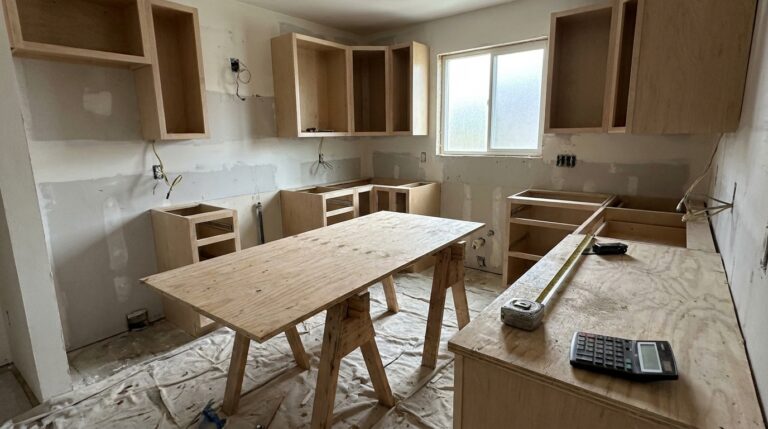
A budget kitchen remodel works when you change what people see and touch, and leave alone what is expensive to move. Cabinet boxes, plumbing and the basic layout usually stay. Doors, hardware, paint, lighting and the backsplash change. Done well, that mix can make a tired kitchen look new for a fraction of a full renovation.
The trick is deciding early which category each item falls into, then sticking to it once the work starts.
What to keep
Before spending a dollar, walk through the kitchen and sort everything into keep, refresh or replace.
- The layout. Moving a sink, range or refrigerator means new plumbing, gas or electrical runs, plus patching. Keeping them in place is the single biggest saving.
- Solid cabinet boxes. If the boxes are plywood or sound particleboard, level and dry, they can carry new paint or new doors for years.
- Working appliances. A clean, matching set of working appliances can wait. Replace the one that is failing, not all four at once.
- Flooring in good shape. A deep clean, regrouting or a refinish is far cheaper than tearing out a floor that runs under the cabinets.
What to change
These are the items that do the visual heavy lifting in a budget kitchen remodel:
- Cabinet color or fronts. Paint or new doors on existing boxes.
- Hardware. New pulls and knobs change the style instantly.
- Lighting. A new ceiling fixture and under-cabinet LED strips.
- Backsplash. Tile, or a removable peel-and-stick product in a rental.
- Faucet. Often the most used fixture in the house, and easy to swap.
- Countertop, if it is damaged. Laminate is the low-cost choice; a short run of stone remnant can also be affordable.
Cheap upgrades that make the biggest difference
Repaint the cabinet fronts
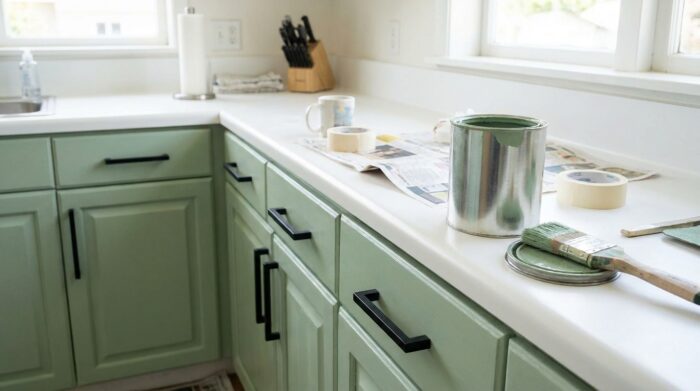
Painting cabinets is the classic low-cost transformation. The result depends almost entirely on preparation: remove doors and hardware, degrease thoroughly, scuff-sand, use a bonding primer, then apply a durable cabinet enamel in thin coats. Label every door and hinge so they go back in the same place. Rushing the cure time is the most common reason painted cabinets chip.
Swap the handles and pulls
New hardware takes an afternoon. Measure the center-to-center distance of existing pulls first: choosing the same spacing means no new holes to fill. If you want a different size, wood filler and touch-up paint handle the old holes before the doors are repainted.
Try a peel-and-stick backsplash
Adhesive tiles and panels have improved a lot. They go up without grout or tools beyond a utility knife, and many remove cleanly, which makes them popular with renters. Keep them away from direct heat behind a gas burner unless the manufacturer rates them for it, and apply them to clean, smooth, painted drywall.
Add light where you work
Plug-in or hardwired LED strips under wall cabinets brighten counters more than any ceiling fixture. Swapping a dated flush mount for a simple modern one costs little more.
Change the faucet and sink accessories
A pull-down faucet makes rinsing easier and immediately updates the sink area. An over-the-sink cutting board or a roll-up drying rack adds work surface in a small kitchen.
Paint the walls and ceiling
A fresh coat in a light, washable finish makes the whole room look cleaner, especially if the cabinets and walls were close in tone before.
How to plan the spend
| Item | Keep | Refresh cheaply | Replace |
|---|---|---|---|
| Layout and plumbing | Yes | – | Only if it does not work |
| Cabinet boxes | If sound | Paint or new doors | If damaged by water |
| Hardware | – | New pulls and knobs | – |
| Backsplash | If neutral | Peel-and-stick or paint | New tile |
| Countertop | If intact | Professional refinishing | Laminate or remnant |
| Lighting | – | Under-cabinet LEDs | New ceiling fixture |
If your project grows beyond cosmetic changes, our step-by-step guide to remodeling a small kitchen covers the order of work, permits and the clearances to respect. For inspiration that does not depend on construction at all, see our roundup of space-saving ideas for compact kitchens, from storage to color.
Small changes that improve storage
A budget remodel is also a chance to fix how the kitchen works. Most of these upgrades cost little and install without a contractor:
- Pull-out organizers that slide into existing base cabinets.
- Drawer dividers for utensils and a vertical rack for baking sheets and cutting boards.
- Shelf risers that double the usable space inside wall cabinets.
- A rail with hooks under the wall cabinets for the tools you use every day.
- A narrow rolling cart that fits between the fridge and the wall.
Because nothing here touches plumbing or wiring, these changes are easy to take with you if you rent or move.
Mistakes that waste a small budget
- Painting over grease, which causes peeling within months.
- Buying all new appliances while the cabinets still look dated.
- Choosing a trendy color for everything; keep bold color to one element.
- Changing the plan halfway through, which adds labor and delivery costs.
Budget kitchen remodel FAQ
What is the cheapest way to update kitchen cabinets?
Cleaning, priming and painting the existing doors, then adding new hardware. It costs mostly materials and time.
Does peel-and-stick backsplash look cheap?
Not if it is installed on a smooth, clean wall and the edges are finished neatly. Thicker products with a textured surface read closest to tile.
Should I replace countertops on a tight budget?
Only if they are damaged or impossible to clean. Otherwise, put the money into cabinets, lighting and hardware first.
Can I do a budget kitchen remodel myself?
Painting, hardware, plug-in lighting and adhesive backsplash are all reasonable DIY projects. Leave gas, new circuits and plumbing changes to licensed pros.