A small kitchen pantry does not need a walk-in closet. What it needs is one dedicated place where food is easy to see, easy to reach and easy to restock. That can be a narrow cabinet, a pull-out unit beside the fridge, a few open shelves or even the back of a door.
Below are the main pantry options for compact kitchens, how to choose between them, and how to organize jars and bins so nothing gets lost at the back.
Pantry options for a small kitchen
| Option | Space needed | Pros | Cons |
|---|---|---|---|
| Tall narrow cabinet | A slim slot along a wall or at the end of a cabinet run | Closed doors hide clutter, lots of height | Deep shelves need bins to stay usable |
| Pull-out pantry | Very narrow gap, often beside the fridge or range | Everything visible from both sides | Needs sturdy hardware and a weight limit check |
| Open shelves | Any free wall | Inexpensive, everything in sight | Must stay tidy, dust and light exposure |
| Door rack | A pantry, closet or basement door | Uses dead space, great for small jars | Limited to light items |
| Freestanding cabinet | A corner or a nearby hallway | No installation, works in rentals | Takes floor space |
The narrow cabinet pantry
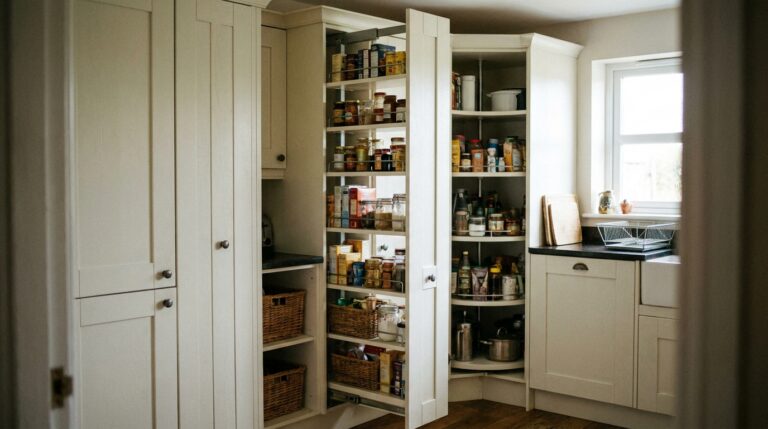
A tall cabinet, even a narrow one, can hold a surprising amount when it runs close to the ceiling. The catch is depth: food pushed to the back of a deep shelf gets forgotten. Fix that with pull-out drawers, bins you slide out like drawers, or shelves of different depths, shallow at the top for cans and spices, deeper at the bottom for bulk items and small appliances.
The pull-out pantry
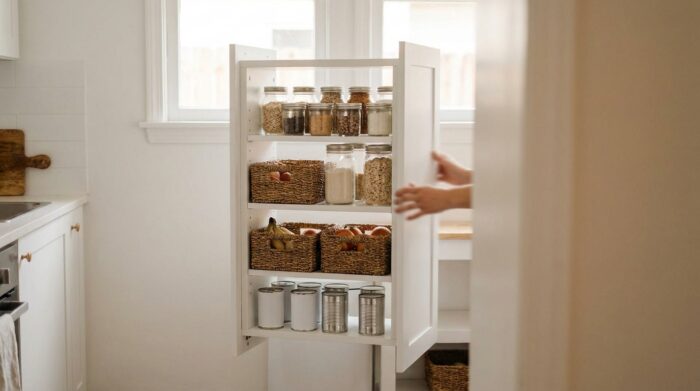
A pull-out pantry is a tall, slim unit on full-extension runners. You slide the whole thing out and see every shelf from both sides, which makes it ideal for oils, spices, cans and jars. It fits in gaps too narrow for a regular cabinet, often next to the refrigerator or the range. If you are adding one, check the weight rating of the runners and keep heavy items on the lower shelves.
Open shelving as a pantry
A wall of open shelves turns food into part of the decor, but only if the containers match and the shelves stay tidy. Keep the shelves out of direct sunlight and away from the stove, since heat and light shorten the life of oils, spices and many dry goods. Use the top shelf for backup stock and the middle shelves for what you reach for every day.
How to organize jars and bins
The container system matters more than the cabinet. A few rules keep a small pantry working:
- Decant the staples. Flour, sugar, rice, pasta, oats and cereal go into clear, airtight containers. You see what is left at a glance, and pests have a harder time getting in.
- Choose square or rectangular shapes. They line up with no wasted gaps, unlike round jars.
- Label the front. Add the expiration date or the date you opened it, so older food gets used first.
- Group by category. Baking, breakfast, snacks, grains, canned goods, sauces. Give each category one bin or shelf.
- Use risers and turntables. Tiered risers let you read the cans behind the front row, and a turntable keeps oils and vinegars within reach.
- Put new purchases behind older ones. First in, first out cuts waste.
Measure your shelf height and depth before buying containers, and buy one first to test it. A matched set that does not fit your shelves is an expensive mistake.
No room for a pantry at all?
Then borrow space. One upper cabinet near the prep area can become a food-only zone. A slim rolling cart beside the fridge holds cans and jars. The back of a nearby closet door takes a full-height rack. In very small homes, a cabinet in the hallway or dining area can hold bulk food that you only need to reach once a week.
A pantry is one piece of the larger system of zones and routines described in our guide to organizing a small kitchen. For layout, storage, color and lighting tips across the whole room, see our full collection of compact kitchen design tips.
What to keep in a small pantry, and what to move out
Space is tight, so the pantry should hold food you eat regularly, not a stockpile. Keep one backup of the staples you use most, such as oil, pasta, rice and canned tomatoes, and skip bulk packs that take a whole shelf. Seasonal baking supplies can go in a labeled bin on the top shelf. Small appliances, paper goods and cleaning products belong somewhere else, so the pantry stays a food-only zone that is quick to scan.
Plan a quick check before each grocery run. Pull the bins forward, move older items to the front, and note what is running low. Five minutes saves you from buying a third jar of cumin and keeps expired food from piling up at the back.
Making a pantry look good
In a small kitchen, a pantry is often in plain view. Matching containers, a single label style and baskets in one natural material make even a packed shelf look calm. Lining the back of an open pantry with paint or wallpaper in a color pulled from the rest of the kitchen turns it into a feature rather than a storage problem.
Frequently asked questions
How do I make a pantry in a small kitchen?
Dedicate one tall cabinet or a set of shelves to food only, add bins and risers, and decant staples into clear labeled containers.
Are pull-out pantries worth it?
In a narrow gap, yes: they use space a regular cabinet cannot, and everything stays visible. Check the hardware’s weight rating.
What should not go in an open pantry?
Anything sensitive to light and heat, such as oils and spices in clear bottles, is better behind a door or in opaque containers.