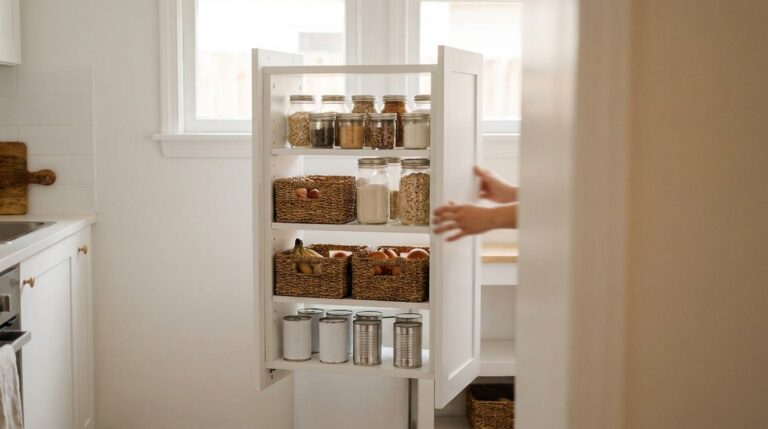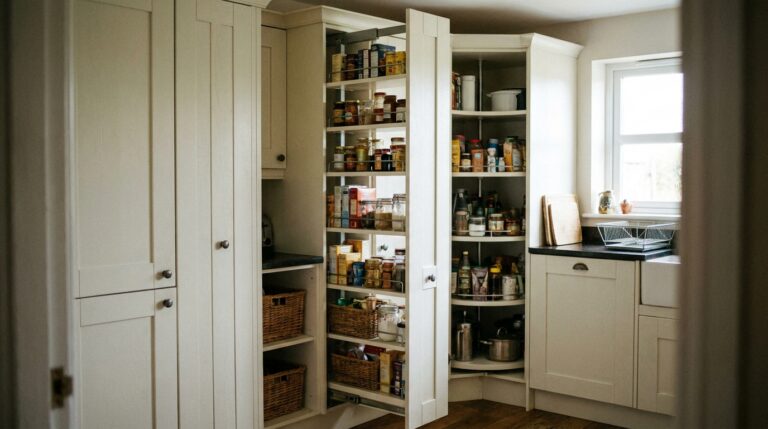
When every cabinet is full, the answer is not always a bigger kitchen. Most small kitchen storage ideas work by using surfaces you already have but ignore: the walls, the inside of doors, the top of the cabinets and the narrow gaps between appliances.
Here are the spots worth claiming, with what to store in each, so you can add capacity without a renovation.
Use the walls
An empty wall is the biggest storage area in most small kitchens. A few fixtures turn it into working space:
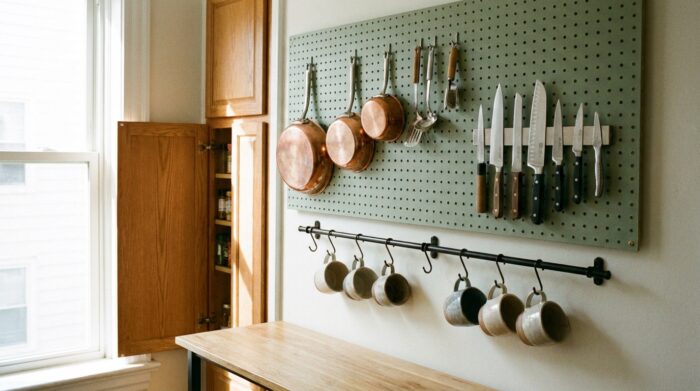
- A rail with S-hooks above the backsplash holds ladles, whisks, mugs and small pans. Choose one long rail rather than several short ones, so it reads as a single clean line.
- A magnetic knife strip frees the counter of a bulky block and keeps blades within reach of the prep area.
- Pegboard gives you a flexible grid for pans, utensils and small baskets. Paint it the wall color so it blends in.
- Narrow open shelves, even only a few inches deep, carry spices, oils and jars in a single row where you can read every label.
- A wall-mounted pot rack or a ceiling rack clears an entire base cabinet if you own a lot of cookware.
Claim the inside of cabinet doors
The back of a cabinet door is a flat panel you open many times a day. Slim racks mounted there can hold spice jars, foil and plastic wrap, pot lids, measuring cups on small hooks, or cleaning supplies under the sink. Measure the depth first: the rack has to clear the shelves when the door closes. Adhesive hooks and slim bins are an easy option for renters.
Put the top of the cabinets to work
The gap between the upper cabinets and the ceiling collects dust and not much else. Fill it with matching baskets or lidded boxes for things you use a few times a year: holiday platters, a roasting pan, extra paper towels, backup supplies. Baskets keep the line tidy and make the items easy to lift down with a step stool. The top of the refrigerator works the same way for light items, but keep it clear of the vents.
Add a rolling cart
A small kitchen cart is one of the most flexible pieces you can add. A narrow cart slides between the fridge and the wall, holding cans, oils and spices. A wider one with a butcher-block top becomes extra prep space and parks against a wall when you need the floor. Choose locking casters so it stays put while you chop, and look for a model with a towel bar or side hooks to add even more storage.
| Cart type | Best for | What to check |
|---|---|---|
| Slim slide-out cart | Gaps of a few inches beside appliances | Exact width of the gap, shelf lips so jars do not fall |
| Three-tier utility cart | Fruit, snacks, coffee station, cleaning supplies | Weight limit, easy-roll casters |
| Cart with a work top | Extra counter space | Counter-height top, locking wheels |
Hooks and bars everywhere
Hooks are the cheapest storage upgrade there is. Mount a row under an upper cabinet for mugs, a tension rod inside the sink cabinet to hang spray bottles, a bar on the side of a cabinet for towels and oven mitts, or a hook on the end of the island for a market bag. A short rail under a shelf can hold paper towels and wraps at the same time.
Find the hidden gaps
Look for the awkward spaces most kitchens waste:
- Toe kicks. Shallow drawers fitted into the base under the cabinets hold baking sheets and trays.
- Above the sink. An over-the-sink rack or a roll-up drying mat gives you a drying area without using counter space.
- Corners. A turntable makes a blind corner usable, and a corner shelf unit uses a dead angle on the counter.
- Under shelves. Under-shelf baskets slide onto an existing shelf and create a second level for wraps or towels.
Storage only helps if the right things go in the right places. Before you buy anything, it pays to declutter and set up work zones; our step-by-step guide on how to organize a small kitchen walks through that order. For layout, color and lighting tricks that make the room feel bigger as well as hold more, take a look at our complete guide to designing a compact kitchen.
Mistakes that waste storage space
Adding storage can backfire if every wall ends up covered. A few habits keep a small kitchen from feeling crowded:
- Too many open fixtures. One rail, one strip and one or two shelves are usually enough. Beyond that, the walls start to look cluttered and the room feels smaller.
- Mismatched baskets and bins. Containers in one material and color look calm. A mix of sizes and finishes reads as mess, even when it is organized.
- Storing things you never use. New storage tends to fill up with items that should have been donated. Declutter first, then add capacity for what remains.
- Forgetting reach. A rack you need a stool to reach will hold the wrong things. Keep daily tools between hip and shoulder height.
Measure every spot before you buy, and test one product before committing to a full set.
Frequently asked questions
How can I add storage to a small kitchen without remodeling?
Use walls, door backs and the tops of cabinets, and add a rolling cart. Rails, hooks, magnetic strips and door racks can all go in with a drill or adhesive.
What storage works in a rental kitchen?
Freestanding carts, tension rods, over-the-door racks, under-shelf baskets and adhesive hooks add space without drilling.
Is open shelving good for small kitchen storage?
Yes, for items you use and wash often. Rarely used items collect dust on open shelves, so keep those behind doors.